

Companies usually hold a great deal of valuable data in their existing business systems, CRM or other internal databases. The problem is often not that there is no data, but that even answering a simple question means ordering a report or needing an IT specialist.
In an experimental project we looked at how AI can change this. This is how Vitarex AI DB Bridge came about: a working prototype that provides a controlled connection between the existing database and the AI client.
The problem
In the pilot we worked with data from the PCA JOB system. The information was available, but querying it required SQL knowledge or separate reports.
In other words, the user could not simply ask:
"Show me the data I need right now."
First, they had to ask for technical help.
What did we build?
The .NET-based Bridge makes the tools needed to explore and query the database available to the AI client through an MCP connection. The prototype connects to an SQL Server database using verified, read-only SQL queries.
The goal is for the user to ask their question in everyday language and for the AI to help find the answer in the company's own data.
It is not enough to simply "let the AI loose" on the database. The solution builds and refines its business glossary in a self-learning way: in a new, previously unknown system, it first tries to map out what the data means, how the pieces relate to each other and which business concepts they describe.
It keeps refining these first interpretations based on user feedback. If a concept means something different in day-to-day operations, or an answer has to take a further relationship into account, this knowledge is built into the glossary. This way, the system gets to know the company's own business language better and better as it is used.
In the pilot, for example, the main data of fitness-for-work examinations was stored in a table whose name alone did not clearly point to this. The concept of an "overdue examination" could not be derived from a single status field either. A precise answer also required uncovering the operating rules.
The result
We built a prototype that provides schema exploration, a business glossary and read-only querying. Queries can be restricted, and requests and executions can be logged; the Bridge does not modify the source data.
From a single question to an analysis of the drug master data
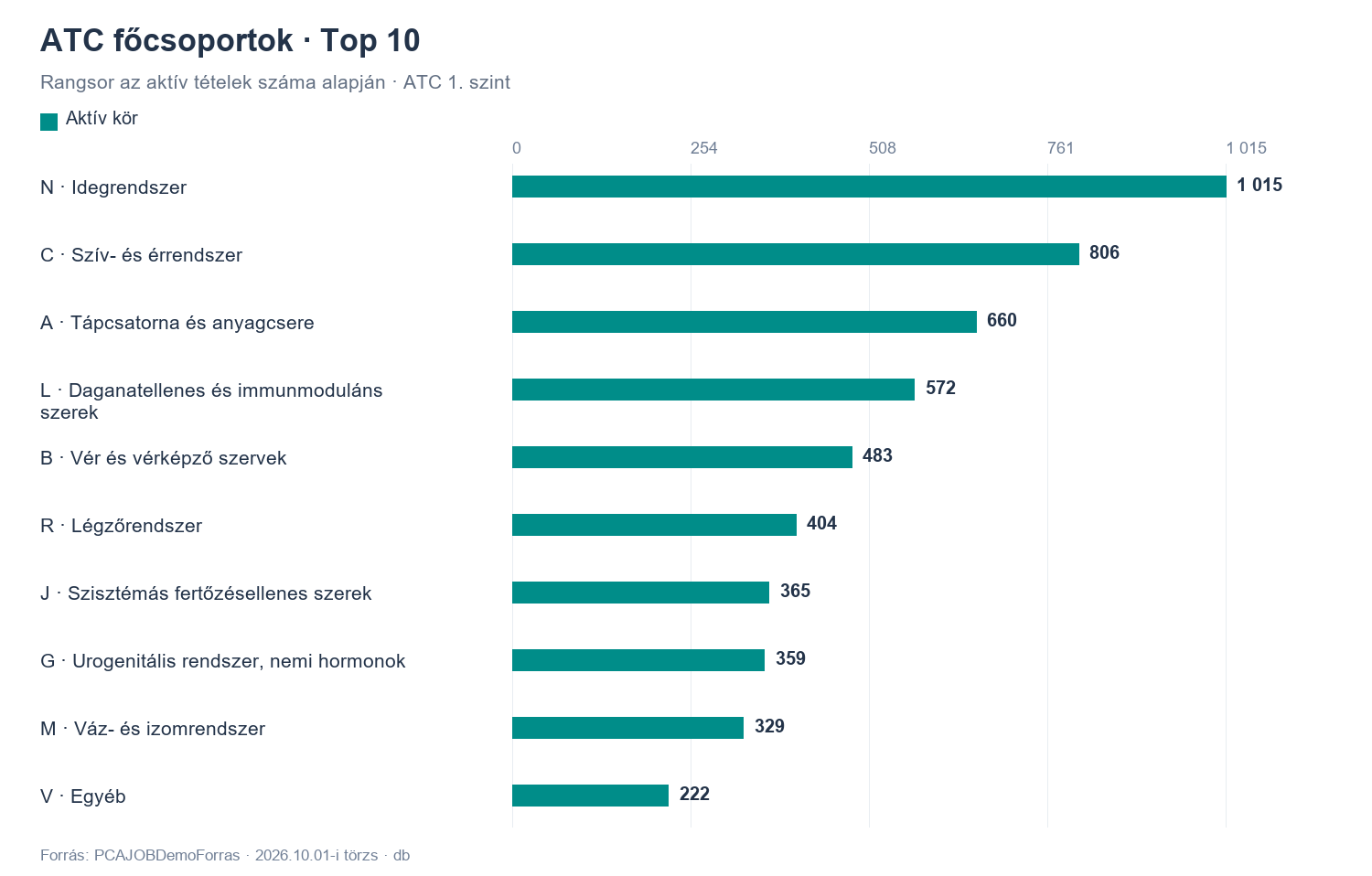
In the attached demo, the gist of the request was: "What does our drug master data look like: how many items are active, prescription-only and subsidized, which are the typical therapeutic groups, and what price levels can we see?" The person asking did not have to specify table names or an SQL query.
The queries produced an executive summary, rankings, charts and CSV datasets. The analysis examined 87,735 drug package records; according to the filter applied, 6,382 items belonged to the active set.
It is also a result when it turns out what the data is not enough for
The demo also showed the limits of interpretation. The manufacturer field, for example, was filled in for only 4.1% of the whole set, so a complete ranking could not be made from it. For 54% of the active items the price was zero: this did not mean a free drug, but that the actual price level cannot be determined from this data.
The main lesson: getting access to the database is only the beginning. A useful answer also requires clarifying the concepts, the scope of data taken into account and the meaning of missing values.
Where does the solution stand? The prototype and the demonstration analysis are done. Rollout to medical users, further examination of query performance and measuring the business benefit are still ahead.
Why might this be interesting for other businesses too?
A similar solution can be useful if at your company:
- There is a lot of data in existing systems, but it is hard to get information out of it.
- Custom reports often have to be requested.
- Managers or colleagues regularly wait for IT to answer simple business questions.
- A complex database that has grown over several years runs in the background.
- You would like colleagues to be able to ask questions about your own company data in natural language.
The actual solution is of course different at every company: the AI has to be adapted to your own system, data and business concepts.
Do you recognize your own problem in this?
If your business holds a lot of valuable data but it is still hard to get a quick answer to a business question from it, it may be worth looking at how AI can make that easier.
You do not need to know in advance which technology is required. It is enough to show us which questions you want answered faster.