
Vibe coding · Professional review
MySongs.ai
What turns an AI application that looks finished into a transparent, sustainable system?
- Project
- MySongs.ai ↗
- Area
- AI music and community platform
- Focus
- Operation, permissions and costs
The interface already looked finished
On the MySongs.ai music platform, users can upload songs, generate music with AI, browse and use community features. AI-assisted development quickly led to a striking interface you could try out.
The question of the professional review was how well the system running in the background supports everything the interface promises. Successfully trying out login, saving or playback does not by itself answer the questions about security, data handling and operations.
"It is easy to check that I can log in. It is harder to check that nobody else can log in as me."
02 · What the professional review looked at
You also have to ask about what the screen does not show
The review moved from the visible features to the rules and technical decisions behind them. The point was to recognize where it is worth looking for problems and which behavior needs separate checking.
Permissions behind the interface
A successful login only proves part of the expected behavior. You also have to check that users can access only their own data, and that the backend enforces the permission rules as well. Repeated submissions and interrupted saves need separate checking.
Clarified operating rules
If the rules of a process are not precisely defined, the AI implements it according to its own assumptions. So besides the screens, roles, approvals and exceptional situations must also be clarified: assumptions can easily remain behind a tidy interface.
Media handling and running costs
An audio file can be uploaded and played even if its format causes unjustified storage and data transfer costs. Handling uncompressed audio is therefore also a business question: file size and the number of plays shape the cost of running the service.
Load and provider lock-in
A test that succeeds with little data does not prove the system works with more users or larger files. The architecture and the chosen providers also determine what scaling, operations or a later move will look like. These decisions need to be made visible too.
One concrete lesson
"The chart was done. The calculation was not. And data collection had not even started."
When we examined the reports, it turned out that behind the numbers on display, even the collection of the data needed for the calculation was missing. What looked like fixing a wrong value in the interface actually required implementing an entire feature.
First the data source, the recording of events and the storage have to be built, and only then can a verifiable calculation and report rest on them. The story shows how far visual readiness and functional readiness can differ.
What was the result of the review?
It became visible where the existing behavior needs to be checked, where more precise business rules are needed, and where a feature behind the interface is still missing. This way, when planning further work, fixes, decisions to be clarified and actual development tasks can already be told apart.
AI can also help solve the problems that were uncovered. But setting the direction of the review, evaluating the answers and checking the fixes still require system-level expertise.
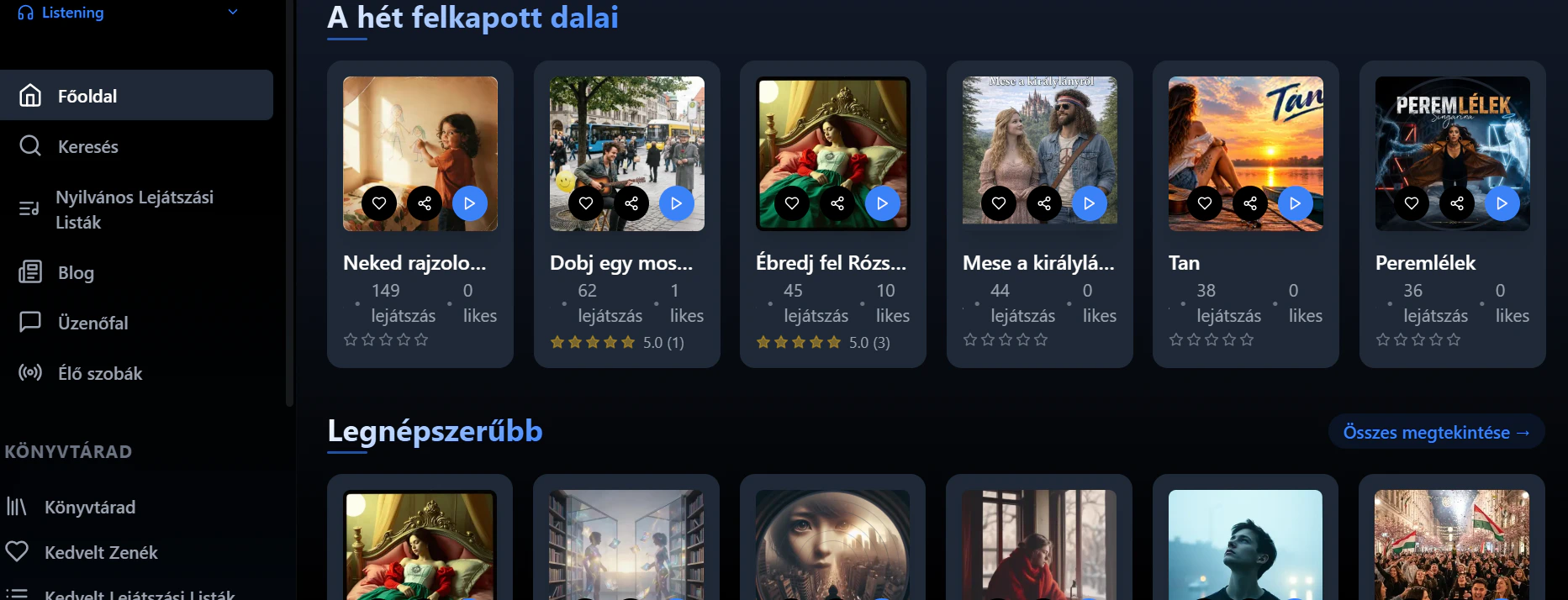
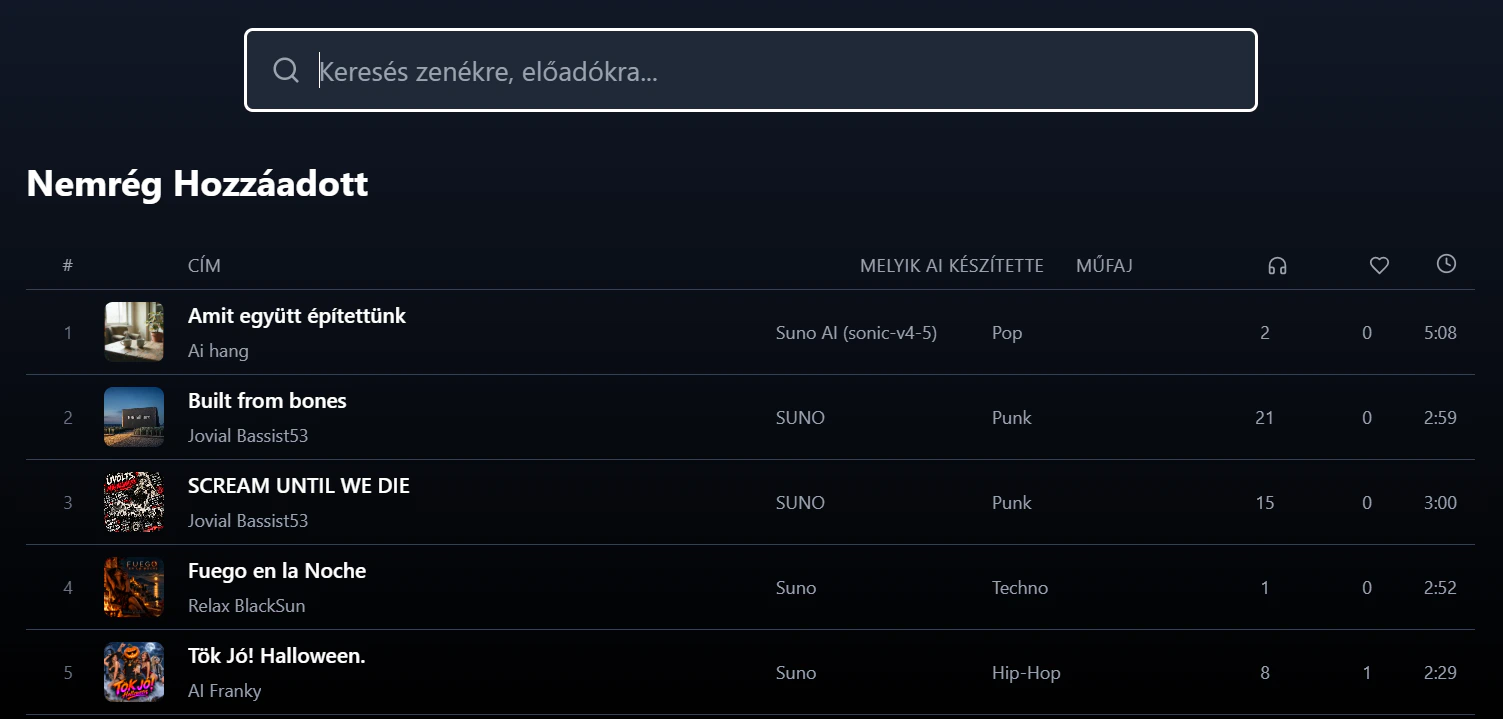
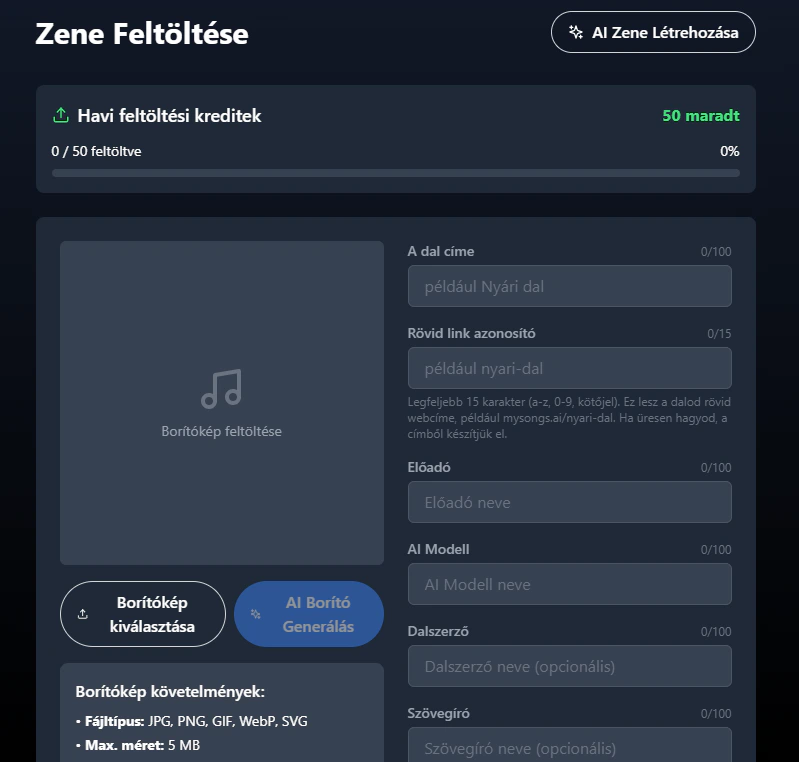
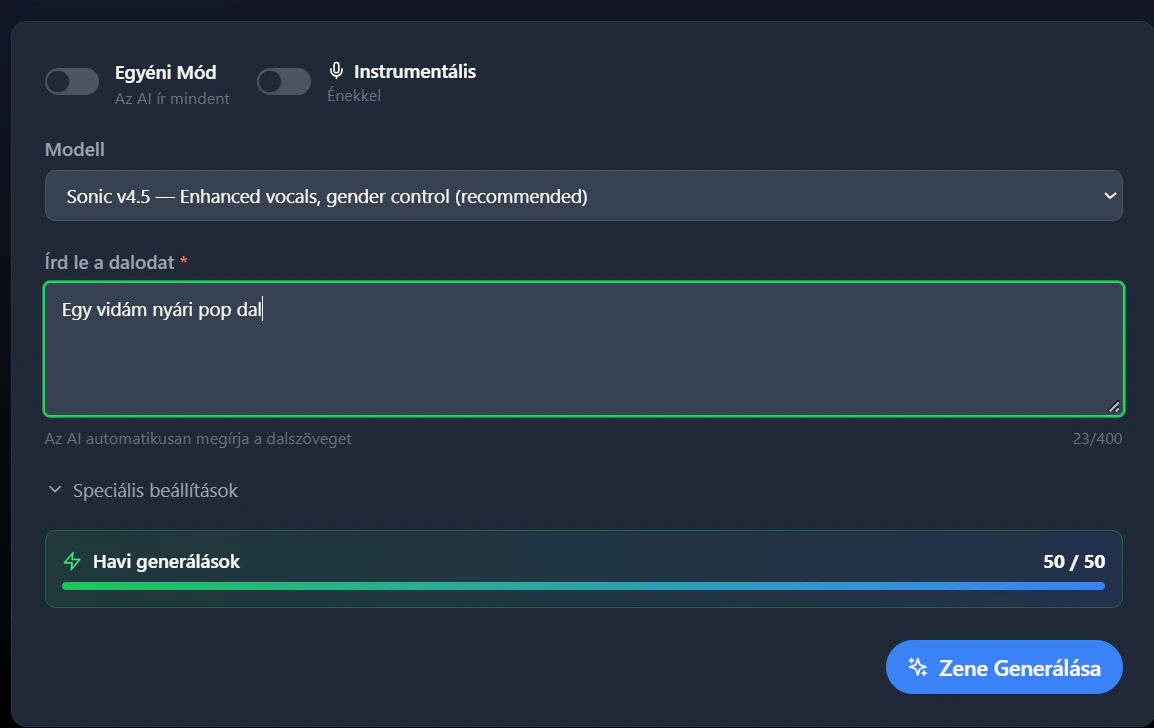
The platform in pictures
From the MySongs.ai interfaces
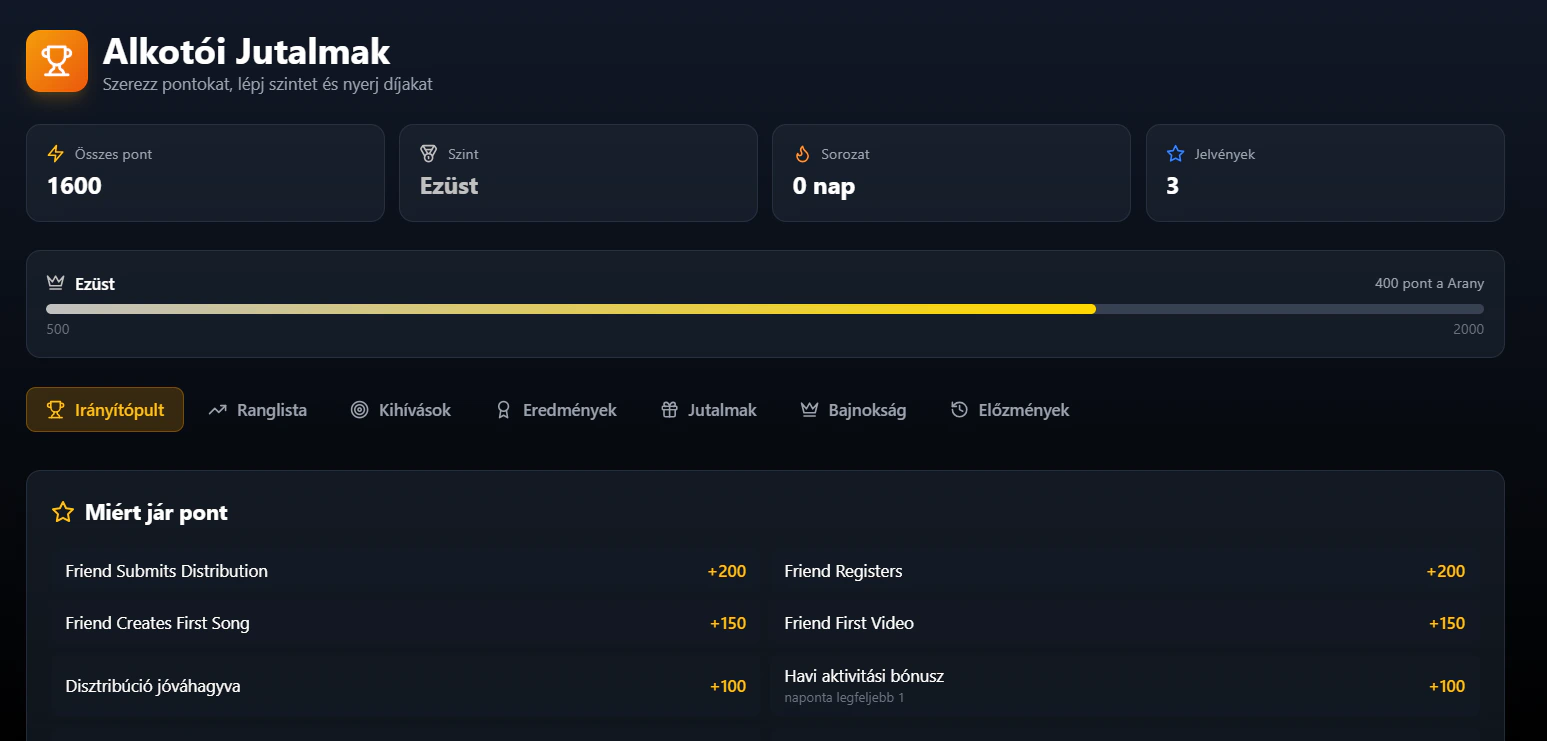
The screenshots we received illustrate the platform's features. Click to open them larger, in place.